
All 4 Affordable Gorilla Trekking Packages must bundle your gorilla permit, ground transport, accommodation, meals, and a licensed safari guide, not just the forest walk itself in the price.
Many travelers discover that low advertised prices exclude permits entirely. Once you understand how these packages are actually built, and what a good guide is genuinely worth, you shop for one very differently.
How an operator structures an itinerary determines whether “affordable” means real value or a stripped-down quote with fees waiting at the trailhead. That structure is worth examining closely before you book anything.
Key takeaways
- Uganda permit cost: $800 per person for foreign non-residents in 2026, dropping to $600 in April, May, and November (rates set by the Uganda Wildlife Authority; verify current tariffs before booking).
- Rwanda permit cost: $1,500 per person, year-round, as generally published; verify the current rate with the Rwanda Development Board before paying, as occasional guidance has referenced alternate figures.
- What’s included: Confirm that the permit, transport, meals, accommodation, and a driver-guide are all in the quoted in the Affordable Gorilla Trekking Packages.
What “affordable” actually means for a gorilla trek
The permit is your biggest fixed cost
In Uganda, the standard gorilla trekking permit for foreign non-residents costs $800 per person in 2026, as published by the Uganda Wildlife Authority. Rwanda’s permit is generally listed at $1,500, though the Rwanda Development Board is the authoritative source and that figure should be verified before booking. Those figures are set by the respective wildlife authorities; they’re not negotiable. That’s also why a “cheap” gorilla trek quote that omits the permit isn’t a real quote at all.
The permit covers your park access, the official ranger-guide assigned to your group, advance trackers who locate the gorilla family before you arrive, and your one-hour visit with that family. It does not cover a safari driver-guide, your vehicle, your lodging, or your meals. Those come from the package operator.
What a legitimate budget package actually bundles together
A well-structured budget gorilla package includes the permit, shared or private vehicle transport to and from the park, accommodation at a budget lodge or midrange guesthouse, and meals, typically breakfast, lunch, and dinner. It also includes a licensed driver-guide who manages your logistics from pickup to drop-off.
What it doesn’t include: tips for guides, rangers, trackers, and lodge staff; porter hire; international flights; visas; and travel insurance. Budget separately for all of these. The distinction matters because some operators quote a low figure that quietly excludes the permit entirely, turning a compelling headline into a very different final invoice.
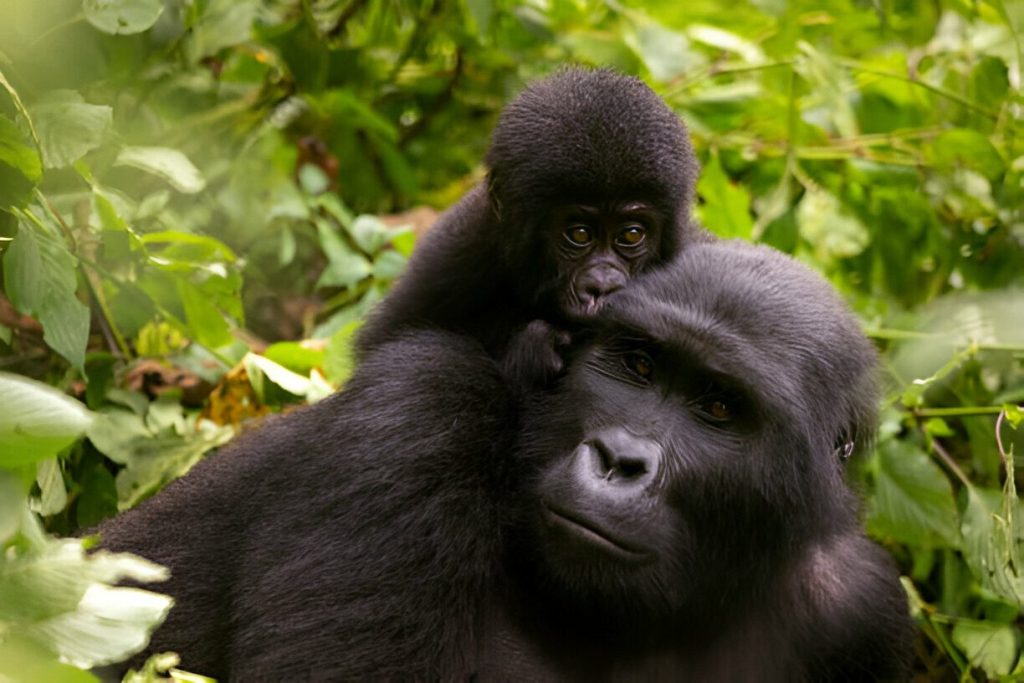
Uganda or Rwanda: which one gives you more for your money?
Bwindi Impenetrable Forest: the strongest value case
Bwindi has approximately 25 habituated gorilla families spread across four trekking sectors: Buhoma, Ruhija, Rushaga, and Nkuringo. That variety means more permit availability and better options for matching trek difficulty to your fitness level.
Trails are muddier after rain, but gorilla trekking runs year-round, and the reduced foot traffic means a quieter experience in the forest. Mgahinga carries the same permit price but hosts fewer habituated families, making it a better fit for travelers who value quiet trails over having multiple sector options.
Volcanoes National Park, Rwanda: simpler logistics, higher entry price
Rwanda’s Volcanoes National Park sits about two hours from Kigali (the capital city of Rwanda), which makes the logistics genuinely simpler for first-time visitors. If you’re combining a gorilla trek with a Kigali city stop or connecting onward to Kenya, Rwanda’s geography works in your favor.
For travelers prioritizing cost, Uganda is the clearer choice. For travelers with limited time or those who want smoother transit as part of a broader East Africa trip, the premium has its place. The choice comes down to what you’re optimizing for: savings or simplicity.
4 Affordable Gorilla Trekking Packages that balance cost and quality
1. 3-day Uganda budget gorilla trek (~$1,300–$3,000 per person)
Based in Bwindi, this affordable gorilla trekking package covers one gorilla trek permit, shared transport from Kampala or Entebbe, two nights at a budget lodge, and all meals. It suits solo travelers and couples willing to share vehicle space to keep costs down. Confirm with your operator that the permit is included in the quoted price, although when you book with us it is included. A legitimate package should spell this out clearly so the number you see reflects what you actually pay.
2. 4-day Uganda mid-range trek (~$3,000–$4,500 per person)
This option adds a full day in the park area, an upgrade to a midrange lodge with better facilities, and private vehicle transport. Some versions include a cultural village visit or a short nature walk alongside the gorilla trek. This is the sweet spot for most American travelers who want genuine comfort without paying for a luxury safari.
It’s also where Big Predator Tours’ on-the-ground experience shows most clearly, in lodge selections and routing that a generic booking platform simply can’t replicate.
3. 3–4-day Rwanda gorilla package (~$2,200–$3,500 per person)
It’s best suited to travelers combining Rwanda with a Kigali city stop or a Kenya extension. We offer this as part of multi-country East Africa itineraries for travelers who want to cover more ground in a single trip without piecing together logistics across multiple operators.
4. Uganda gorilla and primate combo (5–7 days)
This option combines a Bwindi gorilla trek with chimpanzee trekking in Kibale Forest or a gorilla habituation experience in Rushaga, where you spend a full day with a semi-habituated family rather than the standard one hour. It’s the highest-value option for wildlife travelers who want depth, not just one morning in the forest. The per-day cost stays competitive because transport and logistics are shared across multiple activities, spreading the base costs across more days on the ground.
Why a licensed, experienced guide matters on a gorilla trek
What park rangers cover vs. what your safari guide handles
The gorilla permit covers the official Uganda Wildlife Authority ranger-guide and trackers who locate the gorilla family and manage the hour-long visit. What it doesn’t cover is the licensed safari driver-guide who handles your pre-trek logistics: navigating the roads from your lodge to the trailhead, ensuring you arrive with the correct permit and equipment, and managing everything that changes before you reach the forest edge. These are two separate roles, and both matter.
Once the trek begins, the UWA ranger’s instructions take precedence inside the forest. Your safari driver-guide remains your trip coordinator outside of it, handling timing, communication with camp, and anything that shifts in the broader itinerary. Our guides bring over 20 years of on-the-ground experience across Bwindi and Rwanda’s Volcanoes, experience that shapes practical decisions throughout your trip.
What you risk with an unlicensed or unstructured booking
An unlicensed operator or a bare-bones online booking platform can appear to offer a lower price while leaving you without ground support, miscommunicated permits, or last-minute accommodation failures deep in a forest region with limited connectivity. Missed permits, wrong park sectors, and unconfirmed lodges are more common than the reviews suggest. The savings rarely survive contact with the actual trip.
A lower number on a screen means nothing if the permit isn’t included, if there’s no one to call when something shifts, or if the accommodation is unconfirmed. The goal isn’t the cheapest quote. It’s the most honest one, built by someone who has actually driven those roads and knows what can go wrong on a trek day.
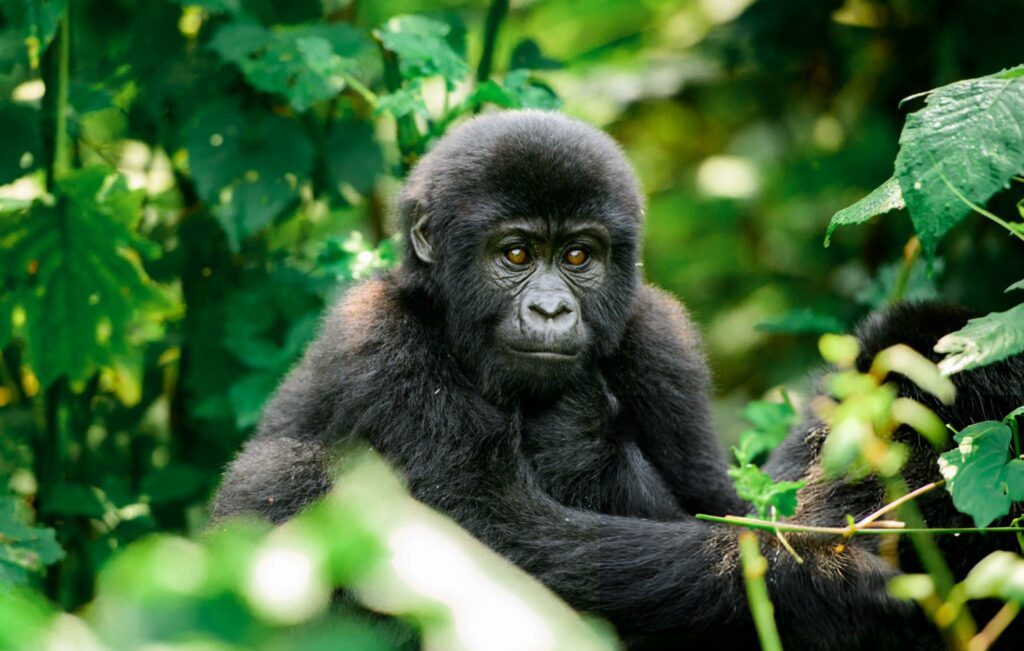
How to time your booking to get the lowest realistic cost
When Uganda’s low-season permits reduce your total cost
Trails are muddier after rain, but that’s a reasonable trade-off for a quieter forest and a lower total cost. If your dates are flexible, low season in Uganda is genuinely worth considering, particularly for travelers who prefer a less crowded experience over peak-season convenience. One thing to confirm before booking: low-season permits are date-specific and cannot be rescheduled, so verify that detail with your operator before paying.
How far ahead you need to book, and in what order
For peak dry season, June through September and December through February, start looking 6–12 months out. Christmas and New Year dates can require up to a year of lead time for preferred sectors. For shoulder and wet months, 2–4 months is often sufficient, though 3–6 months is safer if you have specific dates in mind. Daily visitor limits per gorilla family mean permits can disappear even when accommodation is still wide open.
The sequence matters: confirm permit availability first, secure the permit, then finalize your flights and accommodation. Never book international flights before the permit is confirmed. A good operator handles this order for you so you don’t end up with locked-in flights and no permit to match them. That single misstep is the most common and most expensive mistake travelers make when planning a gorilla trek independently.
Affordable Gorilla Trekking Packages are a real thing when the package is built honestly
Rwanda sits higher, but the logistics are simpler for time-limited travelers, and a well-built package there earns its premium. Neither destination requires you to compromise on the quality of the experience itself.
The word “affordable” only holds up when the package is structured honestly: permit included, exclusions clearly listed, and a licensed guide who actually knows the terrain. That’s exactly what separates good value from a cheap quote, and it’s the difference that falls apart on the ground when you book without asking the right questions first.
If you’re planning an affordable gorilla trekking package and want one built around real costs with no hidden fees, Big Predator Tours puts together itineraries at multiple price points across Uganda and Rwanda, from budget 3-day Bwindi treks to multi-country primate circuit trips. Contact our team to compare options before you lock in your flights.
Frequently Asked Questions
Are tips and porter fees included in the advertised package price?
No, tips and porter hire are not included in the quoted package price. You should budget separately for tips to guides, rangers, trackers, and lodge staff, and for porters when you need one.
Can low-season permits be rescheduled if our plans change?
No, low-season permits are date-specific and cannot be rescheduled. Confirm that restriction with us before paying so you don’t lock in dates you may need to change.
Should we book international flights before our gorilla permit is confirmed?
No, you should not book international flights before your permit is confirmed. Secure the permit first, then finalize flights and accommodation to avoid having locked-in travel with no permit to match it.